L'occitan : qu'es aquò ?
Occitan: what is it?
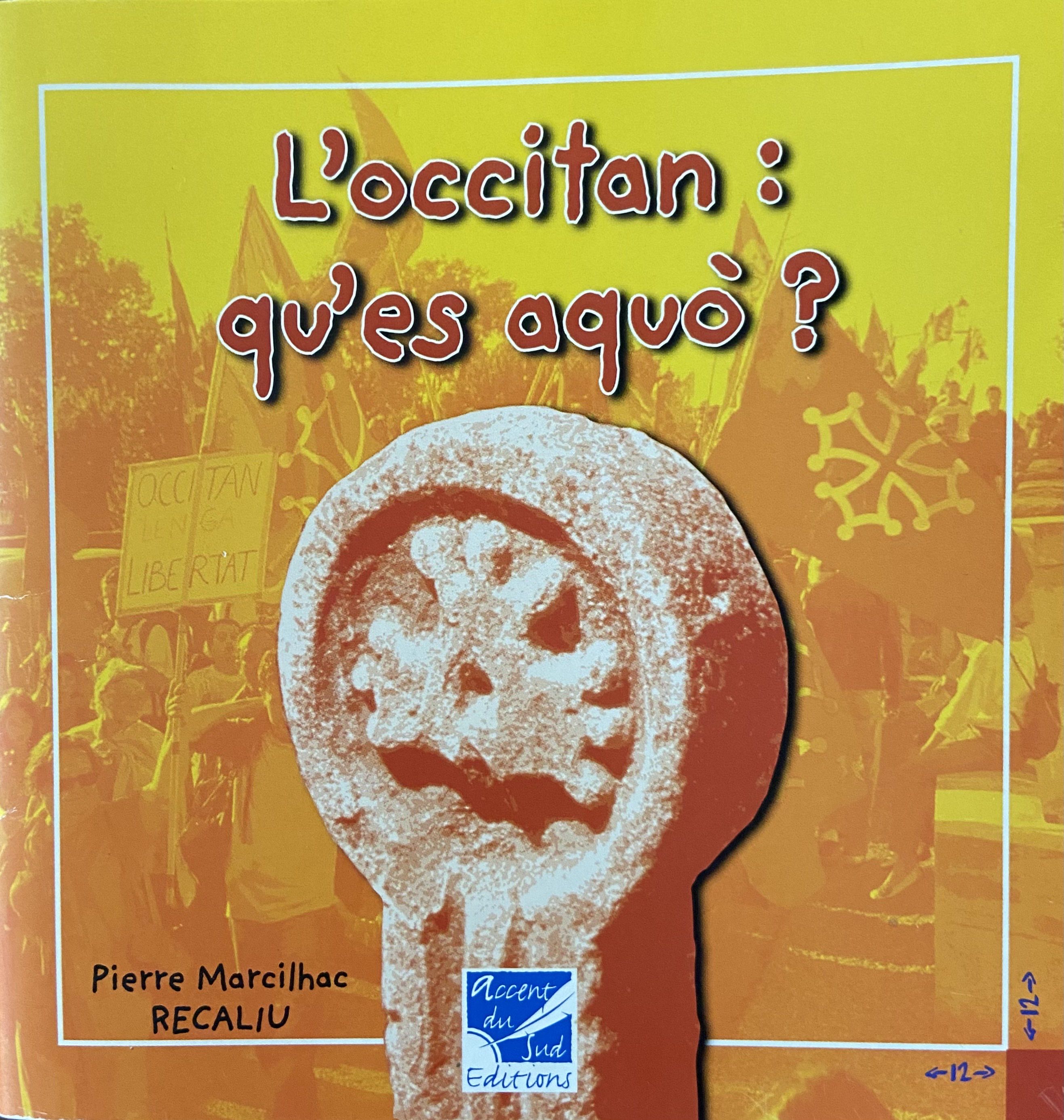
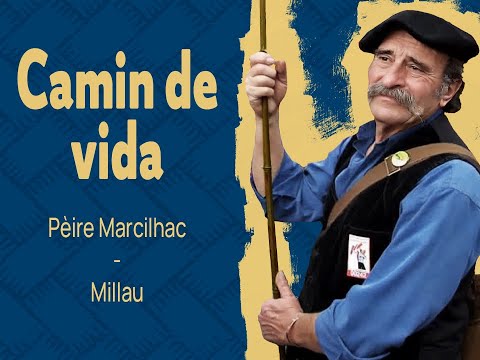
This page reproduces the booklet « L’occitan : qu’es aquò ? », written by Pierre Marcilhac (1941–2024), a committed figure of the Occitan cause. The text is kept in full; only the illustrations have been updated.
The booklet was designed to introduce Occitan to everyone: visitors, newcomers, but also people from the region who have sometimes lost touch with their language and their culture.
Pierre Marcilhac, a former organiser and treasurer of the Institut occitan de l’Aveyron, devoted a large part of his life to passing on the language, the traditions and the history of the Rouergue and of Occitania.
In publishing the booklet here, we wish both to pay tribute to him and to offer a good introduction to Occitan culture, through his simple, clear and accessible words.
translated from French
L'occitan : qu'es aquò ?
This little book sets out to help all those for whom Occitan, langue d’Oc and Occitania remain confused, vague or unfamiliar terms.
It will be useful to tourists, visitors and new residents, but also to a good many Occitans who have lost all bearings with regard to their own roots.
Occitan: qu’es aquò? Indeed, qu’es aquò — not “qu’es aco” or “quezaco” — entered the dictionary of the French language in the 18th century. Occitan is a language with a grammar and a conjugation, in the same way as English or Italian. So we can translate it as: “Occitan: what is it?”.
The territory of the lands of Oc
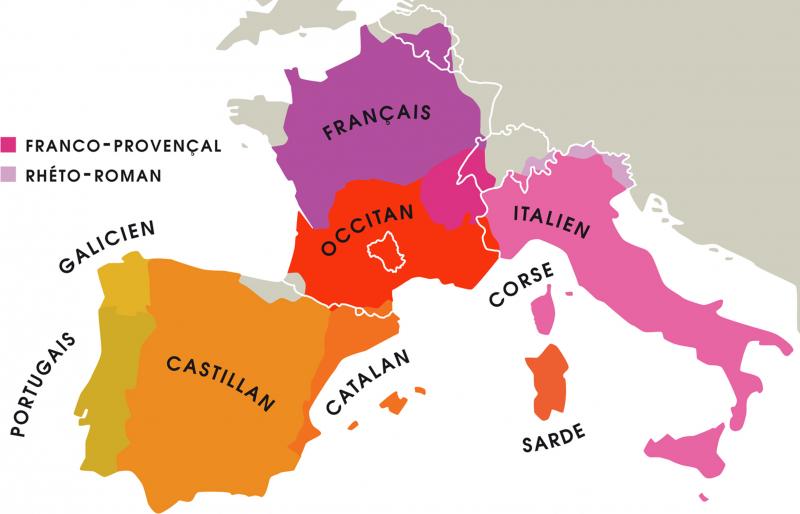
Occitania extends south of a line running from Bordeaux to Briançon, passing appreciably north of Limoges, Clermont-Ferrand and Valence. It takes in the high valleys of the Italian side of the Southern Alps, reaches into Spain with the Val d’Aran, and borders the Basque Country and Catalonia on either side of the Pyrenees. The term “Occitania” has existed since the Middle Ages. In the 14th and 15th centuries the French administration used it to designate the country where the langue d’Oc was spoken. The territory today covers six regions (Aquitaine, Midi-Pyrénées, Languedoc-Roussillon, Provence-Alpes-Côte d’Azur, Limousin and Auvergne, and part of Rhône-Alpes) and takes in 32 départements with a population of 13 million.
Golden age and decline
The language
Occitania is the country where yes is said with the word “òc” (pronounced with an open o), as opposed to the countries of the langue d’“oïl”. The language took shape from Latin, with contributions from the languages of the various peoples who have occupied this territory over 5,000 years (pre-Celtic peoples, Visigoths, Arabs). The first written traces of Occitan appear in charters of the 11th century, and the spoken language must in fact have been formed by the 9th century.
The Occitan language, one of the Latin (or Romance) languages like Italian, Romanian, Catalan, Castilian, French, Portuguese and so on, is considered one of the closest to Latin.
Six dialects (or varieties of the language) are found across the Occitan territory: Languedocien, Gascon, Provençal, Auvergnat, Limousin and Alpine Provençal. The language spoken in the Aveyron is Rouergat, a sub-dialect of Languedocien.
In the Middle Ages the troubadours raised the literature of Oc to its highest point. They sing of love (“fin amor”) and of woman. This was to last until the end of the 14th century and to influence the other cultures of Europe.


Portuguese spelling is inspired by Occitan spelling. Richard the Lionheart wrote poems in Occitan. Dante hesitated between Occitan and his own language when writing the Divine Comedy. The word amour passed from Occitan into French… and so on.
The Edict of Villers-Cotterêts of 1539, which imposed “vulgar French” in all public acts of the kingdom, was unevenly enforced, but its effect was to wipe out the written standard, along with the end of the language’s administrative use.
Literature was to know another high point in the baroque era of the 16th and 17th centuries (Goudouli, Ader…), but after Pey de Garros the written language used French spelling.
Dialectal features
In northern Occitania
- “ca” and “ga” become “cha” and “ja”:
vaca = vacha, camisa = chamisa,
gauta = jauta, desrengat = desrenjat.
- linking z’s are often used: “de z’elas”
- the demonstrative “aquo” becomes “quo” or “quo”
- the indefinite article “uni - una” turns into “in/na” or “n’na”
- the Languedocien form becomes an i: “la hemna”,
lo “hilh” (hilh de puta)
- endings shift to th, or t: “es bèth” = “es bèra”,
“es bèth”, “es bèla” = “es bèra”;
“la sal” = “la sau”; “la lua”
- loss of consonants (c, n, m, d) inside the word:
quatre = quate, la luna = la lua
Gascony
- una comba = una coma,
- change of r: riu = arriu.
- fenestra = finèstra
- statement particles before the verb:
parlas? = e parlas ?
- cantas plan! = be cantas plan !
- canti = que canti
Provence
- a single form (lei/leis before a vowel) for los, las, sometimes written and pronounced li
- frequent opening of e; Per = pèr.
Provença = Provença
- ó often replaces o before n: long = lóng
- iá is pronounced ié
- v is pronounced v
- final consonants often silent
- the first person singular may end in é, í, even ò
- final í shifts to é. sól = sóu, pel = pev
- words: puòi = puòi, nuèch = nuòch
- n’ becomes the negation and replaces “pas”
The Revolution and modern times
Until about 1830 the spoken language was barely affected. It was everyone’s language, even if a few educated people, bourgeois or notables, made little use of it. But it was already being disparaged under the name of patois. The French Revolution made a few attempts at political writing in Occitan, but its authoritarian Jacobin phase condemned “local idioms” as belonging to the old regime and harmful to national unity. Schooling, ignoring Occitan, was to be carried out in French…
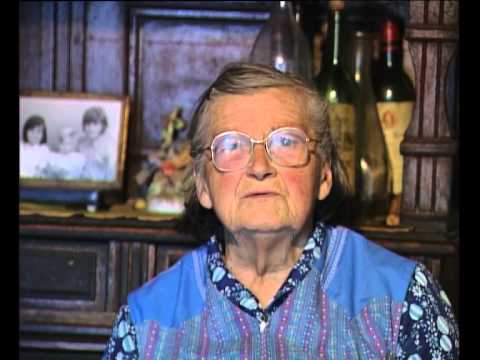
From that moment on, “patois” became synonymous with old-fashioned ways and ignorance, and this took such hold in people’s minds that many wished their own descendants to abandon their language. No great effort would be needed: conscription and compulsory state schooling would help them get their wish.
In practically every village school the teacher, “lo regent”, was tasked with eradicating Occitan speech (as with Breton, Basque, Catalan and the rest). A system of informing and punishment, the signal, was set up to achieve this, and did not die out until around 1920-1930.
But every attack meets a reaction, and between the Revolution and 1850 movements in favour of the langue d’Oc developed. Auguste Fourès, Joseph Roumanille. Frédéric Mistral won the Nobel Prize for literature in 1904 for his work, but it took until the 1930s for the Société d’Études Occitanes to restore the spelling standard that had been envisaged for nearly a century.
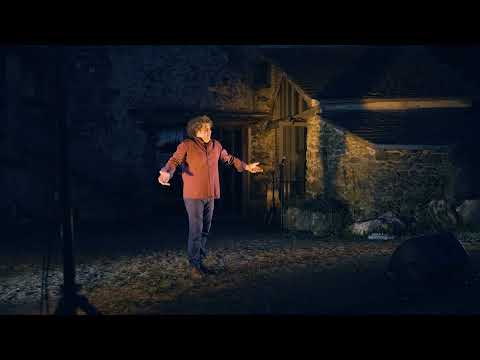
In the second half of the 20th century literature saw a genuine revival with people like René Nelli, Jean Larzac, Jean Boudou, Yves Rouquette, Max Rouquette, Robert Lafont, Bernard Manciet and many others. Theatre too was reborn with them.
Alranq and everyone at the Théâtre de la Rampe, then de la Carrièra. But it is surely in music and song that the renewal is most spectacular. In the 1970s people like Claude Marti, Mans de Breish and Rosina de Peire set things going; and it has not stopped since. The output is substantial, rich and innovative, and is winning over more and more young people with Nadau, Massilia Sound System, Los Fabulous Trobadors, Dupain and others.
A France built on conquest
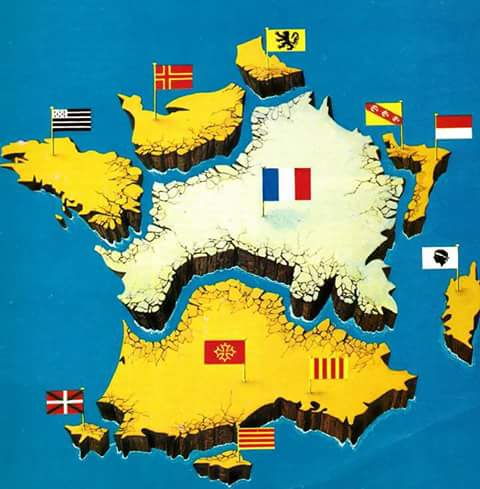
France, with its natural borders of the Pyrenees, the Mediterranean, the Alps and the Rhine, is an artificial construction. It is a state formed by the annexation and assimilation of peoples: Basques, Catalans, Bretons, Flemings, Alsatians and of course Occitans, not to mention the Corsicans and all the peoples of the overseas territories. Michelet the historian wrote “the true France, that of the north”! And later, in 1970, these words of Sanguinetti: “The existence of France is not natural”.
The Occitan community sadly never achieved political and administrative unity over the centuries. But movements and events bear the marks of a deep unity, which seeks to go on living and to develop its culture while respecting its diversity.
Political unity
This is the kingdom of the Visigoths, whose capital moved from Bordeaux to Toulouse and Arles. Out of the originality of a civilisation born of Ligurian, Iberian, Greek, Celtic, Roman and Visigothic contributions there emerged a type of man who cannot be reduced to a purely French archetype.
Cultural unity
The South was called “gallia romana” as opposed to the “gallia barbara” of the North. The Romans brought their architecture (the arenas of Nîmes, the Pont du Gard and so on, but also the barrel tile, known as canal), their language and their law. The North was to remain a land of customary law, Occitania one of written law.
French would become the least Romance of the Romance languages, while Occitan would remain the closest to Latin. The “barbarian” Visigoths had been thoroughly Romanised and civilised on their way through Italy.
The Franks, having occupied the great plain running from the North Sea to the Massif Central (called France for that very reason), coveted the south. Clovis, newly converted to Christianity, decided to punish the heretical Visigoths and the Romans who had persecuted the first Christians: he defeated the Visigoths at Vouillé in 507. But the Franks did not settle in Occitania. They contented themselves with periodically plundering its southern regions. When the Arabs, coming up from Spain, moved into Occitania, the Franks reacted, seeing their conquest threatened. Charles Martel undertook a fresh expedition. Questions of religion were not the chief concern of the people of Occitania; the Frankish threat mattered more, whereas until 721 relations with the Arabs had been good. In 732 Martel defeated the Arabs at Poitiers with the help of Eudes, Duke of Aquitaine, who had secured peace in 721 by marrying his daughter to a Berber chief. Charles Martel reached the Mediterranean in 737 and crushed the last Occitan resistance at Narbonne in 739.
Behind him, as he went back up into France, there was nothing but a burnt and plundered wasteland. Charlemagne would continue the “Reconquista” and would decide, at Thionville in 806, to divide his empire into three nations, one of them Occitania, the kingdom of Louis. But in 842 at Verdun this division was oddly replaced by a division into vertical strips. That is perhaps where the fate of Occitania was sealed.
At the beginning of the 11th century the Counts of Toulouse, the Dukes of Aquitaine and the Kings of Aragon, Counts of Barcelona, dominated the country. Their autonomy was to be shattered by the crusade against the Albigensians. What was this country and this people who laid claim to, and called into question, the Catholic religion, its excesses and its privileges? Where even women dared to concern themselves with religion?
A crusade was therefore launched by Pope Innocent III in 1209, led by the fearsome Simon de Montfort, who made his name at Béziers on 22 July, where the whole population was massacred: “kill them all, God will know his own”. In 1213 came the defeat at Muret, where the King of Aragon was killed by the crusaders, having come to support Raimond VI, Count of Toulouse. This conquest of Occitania by the Franks would be presented in the history of France solely as a victory over the Moorish Muslims. The massacres and the looting were to last until the disappearance of the last Cathars, burnt alive (220 of them) at Montségur in 1244. The Occitan country never recovered from this plundering, destruction and carnage. Languedoc passed under the control of the kings of France.
The Hundred Years’ War saw the English leave Aquitaine. Provence was attached to France in 1481, and it was the King of Navarre who became King of France.
The following centuries would see the French struggle against the Protestantism developing in the South. Peasant revolts broke out everywhere (the Croquants, with Joan Petit at Villefranche de Rouergue), directed against the tax collectors.
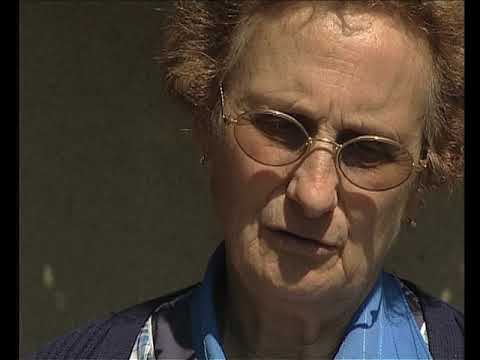
"Joan Petit que dança", literally "Little John is dancing". The title refers to breaking on the wheel, a punishment in which the condemned man’s limbs are broken one by one. Such was the fate of Jean Petit, one of the leaders of the Croquants uprising of 1643, a popular revolt against taxation and political power.
By the Revolution, Occitania had lost even the memory of its cultural and linguistic unity. Power was French and the Occitans were once again subjugated. A final attempt to create a federal republic stretching from Bordeaux to Lyon was swiftly crushed in blood by the central power. Napoleonic Jacobinism prevailed (and prevails still). The Occitan country was carved into départements and sank into provincialism.
Despite a cultural revival, the majority of Occitans entered the melting pot of standardisation (the school of the signal, adherence to patriotic ideology, the pursuit of social advancement) that threatens Occitan identity. A severe economic crisis began to hit the farming world. From the early 19th century, the import of Russian wheat in 1815 ruined the economy of Haut-Languedoc, “the granary of France”. The conquest of North Africa and its colonisation brought about the disappearance of the “poulard d’Auvergne” wheat, replaced by Algerian durum wheat in the making of pasta. Algerian wines too would be partly the cause of the winegrowers’ uprisings of 1907 led by Marcelin Albert: a demonstration in Montpellier on 9 June in which a million people took part.
On 20 June the army fired on the crowd: there were deaths. On the 21st the soldiers of the 17th Infantry Regiment mutinied and marched with their rifle butts in the air. Seven years later Occitans and Bretons would be slaughtered on the battlefields of the north to take Germanic Alsace and Lorraine back from the Germans, in the name of natural borders. The crisis in winegrowing would give rise to fresh demonstrations in 1970… has it really stopped?
The crisis is not confined to farming. The industrial working world is hit hard. The Occitan industrial centres are closing one after another (strikes by the miners of Decazeville or the glovemakers of Millau)
Will Occitania at last find its place in the society of the third millennium?
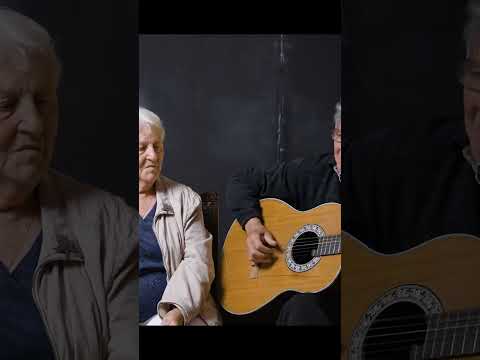
L’Estivada 2025
And here, and today…
Today it seems that most Occitans are becoming aware of the richness of their language and their culture.
One need only look at the success of all the festivals springing up more or less everywhere (L’Estivada in Rodez being surely one of the richest).
Many people would like to learn this language again, to sing in it, but teachers are in short supply.
Many too would like their children to be able to reclaim the language their parents or grandparents were ashamed (vergonha) to pass on, but the Éducation Nationale is dragging its feet.
Our Presidents of the Republic, whenever they travel abroad, never stop encouraging (other people) to embrace cultural diversity.
But in our own country, nothing is done.
French remains the language of the Republic under article 2 of the constitution, even if article 75 recognises the regional languages as part of the national heritage. France has still not ratified the Council of Europe’s European Charter for Regional or Minority Languages.
Meanwhile, in Europe, Catalonia recognises as an official language, alongside Catalan and Castilian, the Occitan spoken by a few people in the Val d’Aran. Here at home, despite the demand, Occitan keeps on declining because of the ill will of the Éducation Nationale. Requests for Occitan options in secondary schools are not taken into account. Occitan broadcasting on television amounts to a few minutes on Saturday evening on FR3 plus about half an hour on Sunday morning (when it is not dropped and replaced by sport!) and not everywhere.
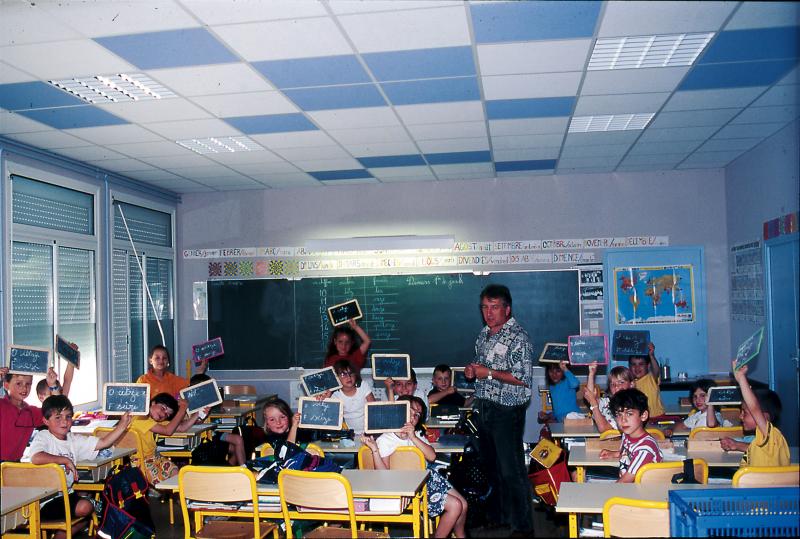
In the Aveyron there are, for example, two calandretas* (Rodez and Millau) and bilingual streams in state schools (Saint-Affrique, La Primaube, Baraqueville, Villefranche and Millau), plus a little awareness-raising provided by a county-wide Occitan association (ADOC 12).
… And tomorrow
But things are moving, and cannot fail to change. Centralist states are increasingly isolated within Europe.
At Carcassonne, on 22 October 2005, 12,000 people from all over Occitania marched through the streets to demand greater recognition and greater resources for Occitan. It was beyond hope: in 2009 there would be 20,000 of them.
The Occitan regions are beginning to work together, in concert, and the budgets granted are growing. 70% of the inhabitants of the Occitan regions say they are in favour of teaching the language, and adult classes have never been in such demand. Literary and artistic creation is more and more ambitious, but has to fight against media preoccupied with Parisian concerns.
The Anem òc demonstration in Carcassonne in 2005
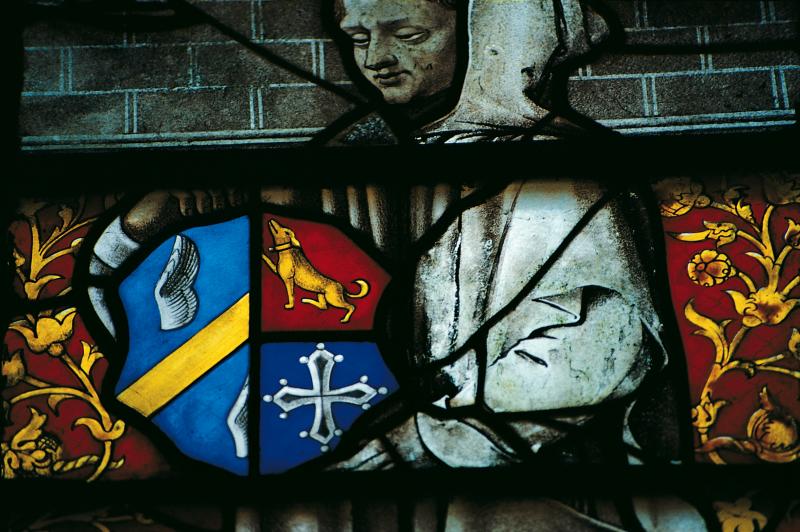
The Occitan cross
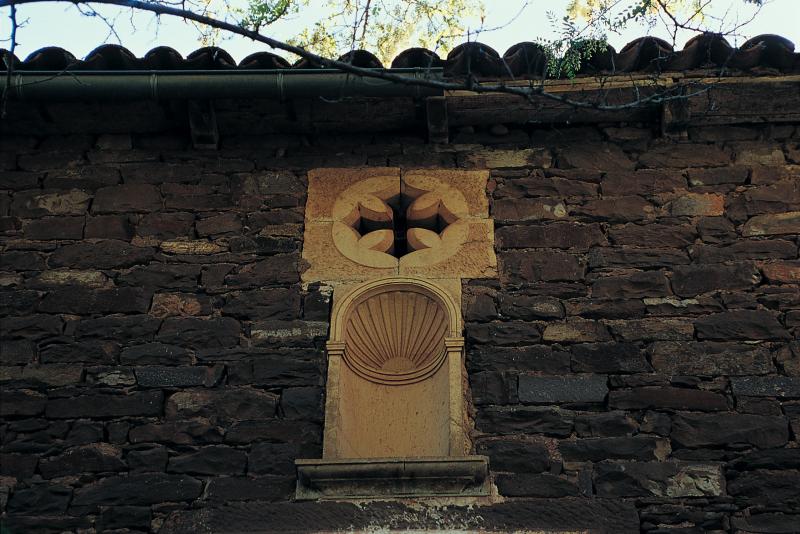
The cross is not necessarily a religious symbol, since it is found long before the coming of Jesus Christ on earth — thus the Egyptian “ankh”, or the small Celtic cross found on a mosaic at Nissan-lez-Ensérune in the Hérault.
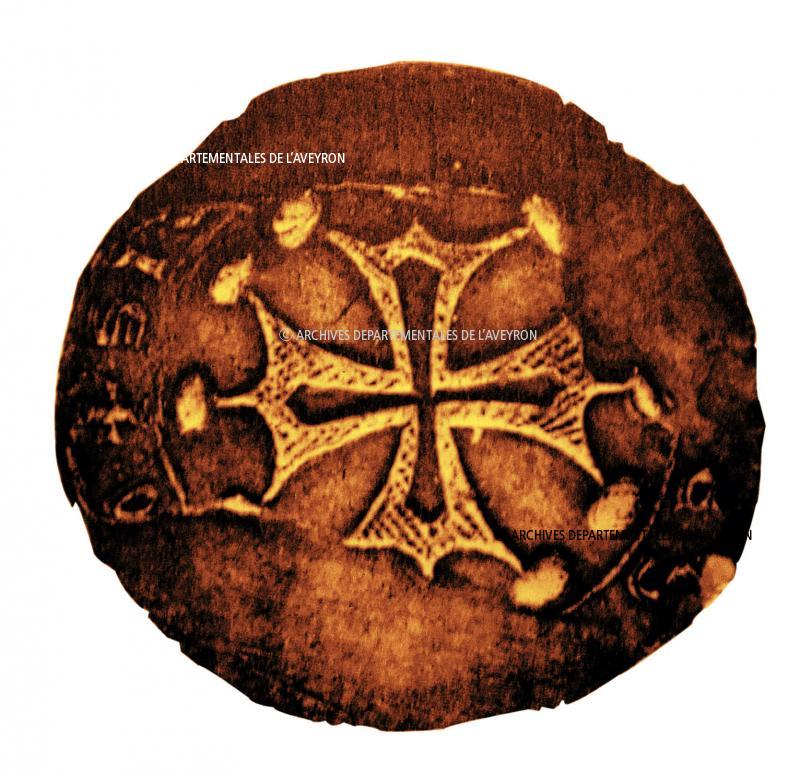
The Occitan cross, long known as the cross of Toulouse, is defined in heraldic terms as follows: “Gules, a cross or, clechy, voided and pommetty of twelve”.
For some, this cross pattée came from Byzantium by way of northern Italy (it is found on a seal of the Venasque family in 1094).
The marriage of Guilhem Taillefer of Toulouse to Emma of Provence ensured that this cross passed to the Count of Toulouse and thereby to virtually all the lands of the “lingua Occitana”.
It was under Raymond V, Count of Toulouse and Marquis of Provence, in the second half of the 12th century, that the first “raimondenc” deniers bearing the Occitan cross were struck.
More or less stylised depictions of the Occitan cross are found on discoidal steles of the 12th and 13th centuries, from the Rouergue to Catalonia by way of the Lauragais.
As for its symbolism, some think of the solar disc depicted in the most ancient civilisations, the solar cult being universal.
Others have seen in the number 12, represented by the number of pommels, a cosmic symbol, one also found in the Apocalypse of St John.
Among comparable models (archetypes), mention should be made of the cross of Turfan in Chinese Turkestan, which goes back to the Nestorian Church (8th-9th centuries). The trefoiled Greek crosses used by the Copts from the 3rd century onwards are reminiscent of the Occitan cross.
Visigothic art offers depictions of the cross pattée, that is, with widening arms.
For others, finally, the Occitan cross would be a simple cross pattée whose pommels originated in the riveting on a crusader’s shield — in this case that of Raymond IV.
In any case it is today, after almost 2,000 years of existence, the undisputed symbol of the whole of Occitania, since it is associated with Provence, with Languedoc and with the Midi-Pyrénées and Aquitaine regions.
It is an identity “brand” of Occitan culture, one that has withstood the fashion for logos so dear to our age. We saw the general outcry aroused by the change to the emblem of the Languedoc-Roussillon region.
May this magnificent Occitan cross live another 2,000 years.
Place names and family names
This Occitan language remains — and always will remain — very much alive in place names and family names.
All the place names of Occitania are Occitan, just as all the place names of Brittany are Breton, those of Catalonia Catalan, and so on. Unfortunately the French administration has often tried, out of ignorance, to Frenchify all these names. Thus Milhau became Millau, Marcilhac became Marcillac… The centralising state has tried to Frenchify place names, sometimes in ridiculous fashion! On the Causse Méjean, for example, there is a commune named St-Pierre des Tripiers — surely nothing to do with makers of trénels*, but rather with poor wretches struggling to survive by “estripant” the soil, that is, by tearing it up, or clearing it (estripar). A truc or a suc are rounded hills. A puèg is a rather flattened hill. A serre, a mountain. The mas are farms or hamlets, as are the “viala”. The bories or bordes are farms, the combes hollows.
All the fons, lasfons, lafon have to do with the fountain or the spring, as do the théron, thérondels or douze, while the truel is the winepress. The blaque, blaquière, blaquèrerie are places covered with white oaks, as are all the rouve or robe or roure, whereas garric or garrigue refers rather to the kermes oak. The canabières are places where hemp was grown and the sègala where rye was. The orto, hort, hortets are gardens or small gardens. The boissières, boussìères have to do with box, as the cadenas or cadenède do with junipers, while the vaïsses, vayssèttes or vayssière relate to the hazel and the vernhes or vergnes to the alder.
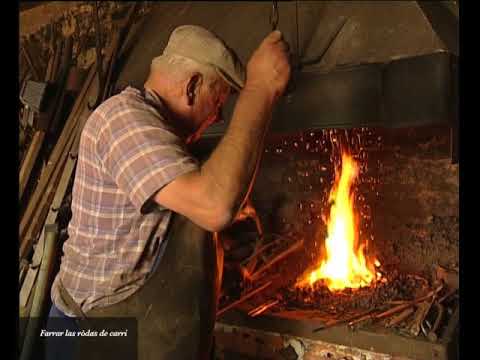
The same goes for family names. The Fabre are the blacksmiths, the Teissèdre with all their variants the weavers, and the Pélissier the skinners. The Bosc and Bousquet are those of the wood, while Fraisse are those of the ash tree, the Bessière those of the birch, the Castan those of the chestnut. The Bernat are Bernards, the Berthomieu Barthélemys and the Bénézet Benoîts; as for the Ferrand, they are Fernands, and the Géli Gilles. If the Fourcadier make pitchforks, the Fournier are bakers and the Mazel butchers. The Pons are “descendants” of various Saint Pons, and the Py are said to have been born under a pine tree, like the Nogaret under a walnut! And all the Del… are from somewhere, whether Del-mas, Del-pont, Del-jardin or Del-puech. We should never be done.
Everyday speech
Occitan, far from being a dead language, has strongly influenced the French of every Occitan. Turns of phrase, words and expressions live on in the everyday speech of French speakers who have become the “people of the Midi”.
So if someone says “Adieu” to you, it will not necessarily carry the sense of a final parting: it will simply be out of friendliness or affection that they say hello or goodbye.
If a farmer friend speaks to you of the “planier” field (flat) that he has just ploughed, it will be in contrast to the fields of the “travèrs” (hillsides). You may also hear some older person speak of un orange or une ongle, because these words do not have the same gender in Occitan and in French — as with the anvil, the comb or the snake…
You may hear someone say “J’ai eu été à Paris” or “j’ai eu mangé des huîtres”, meaning I have been to Paris but a long time ago and seldom, and likewise for the oysters. A direct transcription of Occitan grammar, as with “je suis été”.
You will be told “bougues-toi” for get a move on, or someone will say they are “ensuqué” when the sun has beaten down hard on the back of their neck — though the pastis may have played its part too. Likewise you will “truquer” when you bang your forehead on a lintel that is too low. But you will be like a “peilhe” the day after a wedding, or after too long a walk. Crossing a stream at a ford you may “asaquer” or “trailleher” (take water into your shoes, or hurt a toe against a stone)
You also risk getting enfangué crossing a sagnas or a sampe (bogged down in a marsh)
Of course, if you are told “me fas cagar” it will not have the same meaning as “aller boumer le pantalon”. In the same way, here we have déjeuner at midday, we dine at midday and have soup in the evening, we do not “petit-déjeuner”…! And we are rather inclined to say not that the English are stupid but that they “pègon”!
If you get empégué by the gendarmes, it is rather they who risk sticking to you. Out walking there are the lambinaires (those who dawdle) and the calvucs or cabourds who are forever bartassejer (the madmen who cannot keep to the paths).
At the delicatessen your only choice will be between ventrèche, ase farci and melsat. But we Occitans are not the only ones to have Frenchified… Occitan; the English have borrowed a good many words from us such as “cat” or “toast” (la tòsta is the slice of bread).
So, friends who are tourists or newcomers to Occitania, we hope this “librounet” will help you discover and enjoy this most beautiful language. Most of you are “parla ponchut” (people who speak with a clipped northern accent), unlike us, who have the accent of our own language. This language has rules. The “en” is not pronounced “an” but “ain” (as in the French étain).

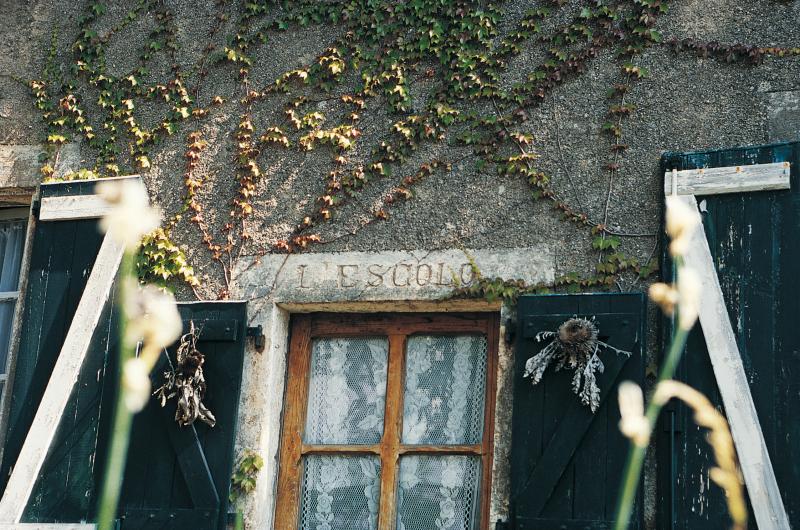
Mas perqué, perqué m'an pas dich a l'escòla, perqué m'an pas dich lo nom de mon país ?
Claude Martí
« But why was I never told, at school, why was I never told the name of my country? »
The “lh” is pronounced like the French ill (as in paille) and the “nh” like the French “gn”. And the “y” (which does not exist in Occitan but has been used in Frenchified Occitan words) must — and this is a rule of French grammar too — be pronounced as in “pays”. So one says Boïne and not Boine, and Reï and not Ré.
Spain recognises on its soil four languages besides the one common to all: Castilian. Those four languages are: Catalan, Basque, Galician and… Occitan! Occitan because it is an official language in the Val d’Aran, a territory the size of a few French cantons!…
So let us hope that those in political office will have the intelligence to repair the harm done by their predecessors, by recognising the minority languages at last and making up the ground the French state has lost in this field.
*calandreta: an Occitan immersion school where teaching is given in Occitan from nursery level onwards. (Diwan schools in Brittany, Seaska schools in the Basque Country)
*trénels: sheep’s or lamb’s tripe rolled with ham and cooked in white wine with carrots. A speciality of the southern Aveyron (in the north and west of the Aveyron this dish is tripous, made with calf’s tripe)